

Community Blogs
Open social media sharing options menu


Community Blogs
Discover how the GLOBE community is engaging in all things GLOBE through the community blog posts below.
Learn how to create a GLOBE community blog post.
Filter By:
Blogs List
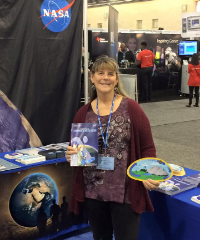
It turns out that we are most likely entering another mild La Niña winter across the globe. This article, “ La Nina Makes a Quiet Return ”, describes how scientists are able to use data on sea surface temperatures from were made by altimeters on the Jason-2 and Jason-3 satellites, and show averaged sea surface height anomalies. Climatologists are predicting that this La Niña should last through the 2017-2018 winter period in the northern hemisphere, and then should change back to neutral conditions by late spring.
Be sure to become a ...
Read More »
Posted in:
Curriculum:
STEM
TECHNOLOGY
SCIENCE AND MATH
Event Topics:
CAMPAIGNS AND PROJECTS (IOPS, ETC)
Field Campaigns:
EL NIÑO
GLOBE Science Topics:
EARTH SYSTEM SCIENCE
CLIMATE CHANGE
BACKYARD SCIENCE
CLIMATE
EARTH AS A SYSTEM
SCIENTIST SKILLS
Investigation Areas:
ATMOSPHERE
EARTH AS A SYSTEM
HYDROSPHERE
PEDOSPHERE (SOIL)
BIOSPHERE
Learning Activities:
EARTH AS A SYSTEM
ATMOSPHERE AND CLIMATE
News Topics:
SCRC RESEARCH
Primary Audience:
PARTNERS
SCIENTISTS
ALUMNI
COUNTRY COORDINATORS
TRAINERS
TEACHERS
STUDENTS
Yesterday I had the pleasure of attending a hearing entitled " Gravity Never Sleeps: Landslide Risk Across the Country "at the Rayburn House Office Building that was intended to inform our lawmakers and government officials about the impacts of landslides in many parts of the United States. As the topic is related to our guiding investigative question for the ENSO Student Research Campaign - " What impacts does water, above and below ground, have on our environment? ", I thought I would share some of the things that I learned.
Jonathan Godt, the Landslide Hazard Programs Coordinator ...
Posted in:
Curriculum:
STEM
SCIENCE AND MATH
TECHNOLOGY
Event Topics:
CAMPAIGNS AND PROJECTS (IOPS, ETC)
SCIENCE SYMPOSIA AND FAIRS
Field Campaigns:
EL NIÑO
GLOBE Science Topics:
EARTH SYSTEM SCIENCE
CLIMATE CHANGE
DATA INCLUDED
BACKYARD SCIENCE
CLIMATE
EARTH AS A SYSTEM
SCIENTIST SKILLS
GLOBE PROTOCOLS
GLOBE Working Groups:
EDUCATION WORKING GROUP
Investigation Areas:
ATMOSPHERE
EARTH AS A SYSTEM
HYDROSPHERE
PEDOSPHERE (SOIL)
BIOSPHERE
Learning Activities:
EARTH AS A SYSTEM
ATMOSPHERE AND CLIMATE
LAND COVER/BIOLOGY
HYDROLOGY
SOIL
News Topics:
VIRTUAL SCIENCE FAIR
REGIONS
TRAINING
Primary Audience:
PARTNERS
SCIENTISTS
ALUMNI
COUNTRY COORDINATORS
TRAINERS
TEACHERS
STUDENTS
Gathering data
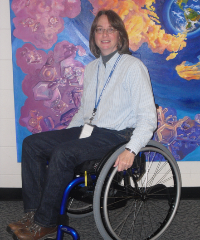
Once you have determined what protocols to use for your project, you will need to develop a plan for gathering the data. It might consist of using automated data collection or making your own measurements. Also, it may include finding data taken by others, such as when you compare your observations with those of another GLOBE school.
Automated Data Collection
If you are using an automated data collection device or devices, verify that the data are being recorded properly before your official testing timeframe. You will want to monitor that the data are being ...
Posted in:
Curriculum:
STEM
EDUCATION RESEARCH
SCIENCE AND MATH
TECHNOLOGY
Event Topics:
SCIENCE SYMPOSIA AND FAIRS
GLOBE Science Topics:
SCIENTIST SKILLS
MEETINGS/CONFERENCES
GLOBE Working Groups:
SCIENCE WORKING GROUP
EDUCATION WORKING GROUP
News Topics:
VIRTUAL SCIENCE FAIR
Primary Audience:
TEACHERS
STUDENTS
Teacher's Guide:
SECONDARY: 9-12
MIDDLE: 6-8
Sometimes, actually most of the time, I forget to be grateful for the fact that I have easy access to clean freshwater. When Thanksgiving rolls around each year, I try to step back and consider the many things I have to be thankful for. Day after day I work with the amazing science team behind the Global Precipitation Measurement mission, and I never cease to be completely amazed at how technology has enabled us to monitor our home planet.
During our last ENSO Phase III webinar, we learned about water quality in Europe from several GLOBE scientists, teachers, and students ...
Posted in:
Curriculum:
STEM
LANGUAGE CULTURE AND ARTS
SCIENCE AND MATH
TECHNOLOGY
Event Topics:
CAMPAIGNS AND PROJECTS (IOPS, ETC)
Field Campaigns:
EL NIÑO
WATERSHEDS
GLOBE Science Topics:
EARTH AS A SYSTEM
SCIENTIST SKILLS
EARTH SYSTEM SCIENCE
CLIMATE CHANGE
DATA INCLUDED
CLIMATE
GLOBE Working Groups:
EDUCATION WORKING GROUP
Investigation Areas:
ATMOSPHERE
EARTH AS A SYSTEM
HYDROSPHERE
BIOSPHERE
Learning Activities:
EARTH AS A SYSTEM
ATMOSPHERE AND CLIMATE
LAND COVER/BIOLOGY
HYDROLOGY
Primary Audience:
TEACHERS
STUDENTS
SCIENTISTS
Prepare your Research Plan
Prof. Constantinos Cartalis (University of Athens)
___________________________________________________________________________
The selection of the research strategy for the formulation of your research plan is probably the most important decision to be made. The choice of the strategy, whether analytical, experimental, descriptive or a combination of these, depends on several inter-correlated parameters and preconditions. Broadly speaking a research plan has four main points:
explanation of proposed research ( what will be done) ...
Posted in:
Curriculum:
STEM
EDUCATION RESEARCH
SCIENCE AND MATH
TECHNOLOGY
Event Topics:
SCIENCE SYMPOSIA AND FAIRS
GLOBE Science Topics:
SCIENTIST SKILLS
MEETINGS/CONFERENCES
GLOBE Working Groups:
SCIENCE WORKING GROUP
EDUCATION WORKING GROUP
News Topics:
VIRTUAL SCIENCE FAIR
Primary Audience:
TEACHERS
STUDENTS
Teacher's Guide:
SECONDARY: 9-12
MIDDLE: 6-8
GRADE LEVELS
By Claudia Caro and Erika Podest
Curiosity is a natural characteristic of all people, especially the young. It is the first step for a child to build knowledge, and I am sure we can all remember as children asking what?, why?, where?, and numerous other questions as we tried to learn new things.
Unfortunately, as children grow up, this natural curiosity slowly fades. Why is this? We don’t exactly know, but it might be that as children grow older they think they know all the answers or because most school systems are structured to teach by providing answers rather than ...
Posted in:
Curriculum:
STEM
EDUCATION RESEARCH
SCIENCE AND MATH
TECHNOLOGY
Event Topics:
SCIENCE SYMPOSIA AND FAIRS
GLOBE Science Topics:
SCIENTIST SKILLS
MEETINGS/CONFERENCES
GLOBE Working Groups:
SCIENCE WORKING GROUP
EDUCATION WORKING GROUP
News Topics:
VIRTUAL SCIENCE FAIR
Primary Audience:
TEACHERS
STUDENTS
Teacher's Guide:
SECONDARY: 9-12
MIDDLE: 6-8
Authors: Claudia Caro and Olawale Oluwafemi (Femi)
Our participation in the International Virtual Science Symposium (IVSS) as judges has allowed us to learn more about the scientific experiences of students involved in the GLOBE Program. As members of the GLOBE Science Working Group with backgrounds in Geography and Biology, we would like to share our findings about the importance of the IVSS in the GLOBE community and give you some advice to empower your participation in this extraordinary yearly event.
Why an International Virtual Science Symposium?
Knowledge ...
Posted in:
Curriculum:
STEM
SCIENCE AND MATH
TECHNOLOGY
Event Topics:
SCIENCE SYMPOSIA AND FAIRS
GLOBE Working Groups:
SCIENCE WORKING GROUP
EDUCATION WORKING GROUP
Primary Audience:
TEACHERS
STUDENTS
COUNTRY COORDINATORS
Teacher's Guide:
SECONDARY: 9-12
MIDDLE: 6-8
GRADE LEVELS
When you start writing your GLOBE report for IVSS, it might be difficult because you might not sure where to start. We tend to start writing the Methods section first because it is something you did it yourselves and it should be relatively easy and straight forward to write. Second, you should write the Results section, do graphs, tables and texts (think of a best way to present your cool data to the whole world). Third, you should start writing the Introduction stating your hypotheses and predictions. The next step would be the Discussion section. It is funny to say but as scientists, ...
Posted in:
Curriculum:
STEM
EDUCATION RESEARCH
SCIENCE AND MATH
TECHNOLOGY
Event Topics:
MEETINGS
SCIENCE SYMPOSIA AND FAIRS
GLOBE Science Topics:
SCIENTIST SKILLS
MEETINGS/CONFERENCES
GLOBE Working Groups:
SCIENCE WORKING GROUP
EDUCATION WORKING GROUP
News Topics:
VIRTUAL SCIENCE FAIR
Primary Audience:
TEACHERS
STUDENTS
Teacher's Guide:
GRADE LEVELS
SECONDARY: 9-12
MIDDLE: 6-8
From the start, the measurement of daily maximum and minimum air temperature within one hour of local solar noon has been a key GLOBE protocol. The low cost approach was to use a U-tube thermometer housed in a wooden instrument shelter facing away from the equator. The U-shaped tube contained mercury with pins on either side of the mercury. As the air temperature warmed the pin on one side would move while the other pin stayed in place; when the air cooled, the pin on the other side would be pushed up. The pins were held in place by magnetized strips behind the thermometer tube so that ...
Posted in:
Curriculum:
STEM
TECHNOLOGY
GLOBE Science Topics:
EARTH AS A SYSTEM
EARTH SYSTEM SCIENCE
GLOBE PROTOCOLS
CLIMATE CHANGE
CLIMATE
GLOBE Working Groups:
SCIENCE WORKING GROUP
Investigation Areas:
ATMOSPHERE
Primary Audience:
TEACHERS
TRAINERS
STUDENTS
PARTNERS
SCIENTISTS
ALUMNI
COUNTRY COORDINATORS
https://docs.google.com/forms/d/e/1FAIpQLSc3kwd0hHXG--39z2ADxi7-blg11wAx1RUG42GVHgsG12BP6g/viewform?c=0&w=1 Did you know that mosquito-borne diseases are impacted by both the El Nino and the La Nina weather patterns? Tonight during the ENSO Student Research Campaign Webinar #10 (at 8 pm EST) Dr. Assaf Anyamba will share the results of his research on the impact of these different patterns on the onset of Rift Valley fever in parts of Africa. As we know, these changing weather patterns alter the normal climatic conditions for regions around the world. In some places, this results in ...
Posted in:
Curriculum:
STEM
EDUCATION RESEARCH
SCIENCE AND MATH
TECHNOLOGY
Event Topics:
CAMPAIGNS AND PROJECTS (IOPS, ETC)
Field Campaigns:
EL NIÑO
GLOBE Science Topics:
EARTH SYSTEM SCIENCE
SCIENTIST SKILLS
CLIMATE CHANGE
CLIMATE
Investigation Areas:
ATMOSPHERE
EARTH AS A SYSTEM
HYDROSPHERE
PEDOSPHERE (SOIL)
BIOSPHERE
Learning Activities:
EARTH AS A SYSTEM
Primary Audience:
TRAINERS
TEACHERS
SCIENTISTS

Scientists rely on research, statistical models, and climate forecast models to help them determine upcoming natural events.
Currently, scientists are have a difficult time deciding if and when the potential big El Niño event will happen. It will happen in 2017, but will it be the Summer or Fall?
"Right now, many climate forecast models do predict the development of a full-fledged El Niño during this summer or fall. It’s likely that these models are acting on the much warmer-than-average waters near the coast of South America—the “Coastal El Niño" says Anthony Barson in his NOAA ...
Posted in:
Curriculum:
STEM
ASSESSMENT AND EVALUATION
EDUCATION RESEARCH
LANGUAGE CULTURE AND ARTS
SCIENCE AND MATH
TECHNOLOGY
Field Campaigns:
EL NIÑO
SMAP
Investigation Areas:
ATMOSPHERE
EARTH AS A SYSTEM
HYDROSPHERE
PEDOSPHERE (SOIL)
BIOSPHERE
Learning Activities:
EARTH AS A SYSTEM
ATMOSPHERE AND CLIMATE
LAND COVER/BIOLOGY
HYDROLOGY
SOIL
Primary Audience:
PARTNERS
SCIENTISTS
ALUMNI
COUNTRY COORDINATORS
TRAINERS
TEACHERS
STUDENTS
There will be a special Google hangout for GLOBE teachers and scientists on Feb 15 at 7pm (ET ). During this event, we will learn about the results of the research from several scientists who were onboard the research vessel, and will have a chance to ask questions about this work and results. http://bit.ly/2lL4Kgd
No registration required- open to any GLOBE teacher and/or scientist! Please share this!
GLOBE Educator Webinar - Feb 15, 7pm ET
Agenda below:
Overview (~45 min program)
Learn about an ongoing Earth science expedition with NASA scientists ...
Posted in:
Curriculum:
SCIENCE AND MATH
TECHNOLOGY
Event Topics:
CAMPAIGNS AND PROJECTS (IOPS, ETC)
Field Campaigns:
EL NIÑO
GLOBE Science Topics:
EARTH AS A SYSTEM
EARTH SYSTEM SCIENCE
SCIENTIST SKILLS
GENERAL SCIENCE
CLIMATE CHANGE
CLIMATE
Investigation Areas:
ATMOSPHERE
EARTH AS A SYSTEM
HYDROSPHERE
BIOSPHERE
Learning Activities:
EARTH AS A SYSTEM
ATMOSPHERE AND CLIMATE
HYDROLOGY
News Topics:
SCRC RESEARCH
Primary Audience:
TRAINERS
TEACHERS
PARTNERS
SCIENTISTS
ALUMNI
COUNTRY COORDINATORS