

Community Blogs
Open social media sharing options menu


Community Blogs
Discover how the GLOBE community is engaging in all things GLOBE through the community blog posts below.
Learn how to create a GLOBE community blog post.
Filter By:
Blogs List
Learning science involves learning important concepts, conducting experiments to see first-hand how researchers discovered and confirmed some elements of science concepts, and learning how to think scientifically. With this complete approach to learning science, students are well-prepared to deal with the natural world around them and to make wise decisions when confronted with various choices. The ability to think scientifically is a valuable skill in almost all aspects of life and doing science teaches scientific habits of mind.
Students can do science through research projects ...
Read More »
Posted in:
Curriculum:
STEM
SCIENCE AND MATH
GLOBE Science Topics:
SCIENTIST SKILLS
GENERAL SCIENCE
BACKYARD SCIENCE
GLOBE Working Groups:
SCIENCE WORKING GROUP
Investigation Areas:
ATMOSPHERE
EARTH AS A SYSTEM
HYDROSPHERE
PEDOSPHERE (SOIL)
BIOSPHERE
News Topics:
VIRTUAL SCIENCE FAIR
COMPETITIONS
Primary Audience:
TEACHERS
STUDENTS
PARTNERS
COUNTRY COORDINATORS
Quaking aspens can grow in a wide range of environmental conditions. They can tolerate a wide variety of variations in climate and environmental conditions including slope, moisture, surrounding vegetation, and soil ( https://www.fs.fed.us/wildflowers/beauty/aspen/ecology.shtml ). I found this information with a simple web search. But, before there was access to infinite articles, websites, and papers all a click away, scientists had to figure out growth trends using data. So, before I decided to do a web search about the environmental conditions of aspen habitats (my memorized aspen ...
Posted in:
Event Topics:
SCIENCE SYMPOSIA AND FAIRS
GLOBE Science Topics:
SCIENTIST SKILLS
Investigation Areas:
EARTH AS A SYSTEM
HYDROSPHERE
PEDOSPHERE (SOIL)
ATMOSPHERE
BIOSPHERE
News Topics:
VIRTUAL SCIENCE FAIR
Primary Audience:
TEACHERS
STUDENTS
Heavy rains, floods and thunderstorms have affected thousands of families in Perú since January 14 th , 2017. Apparently, Peruvians were not prepared to face this strong natural events as well as their later consequences: Overpopulation of mosquitos that spread dengue and other diseases as chikungunya virus, reduction of some important crops (rice, banana, yucca, yellow corn, avocado, cotton, asparagus, sugar cane, mango, grapes, alfalfa and lemon) (El Comercio, 2017 a ) and damages in many public facilities (bridges and roads) and private property (houses) - 100000 victims, 157000 houses ...
Posted in:
Event Topics:
CAMPAIGNS AND PROJECTS (IOPS, ETC)
Field Campaigns:
EL NIÑO
SMAP
GLOBE Science Topics:
CLIMATE
GLOBE Working Groups:
SCIENCE WORKING GROUP
Investigation Areas:
EARTH AS A SYSTEM
HYDROSPHERE
PEDOSPHERE (SOIL)
ATMOSPHERE
BIOSPHERE
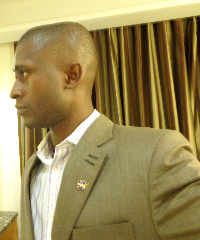
This time was my first visit to Trinidad and Tobago and to the LAC region. The visit was first of its kinds, knowing vividly that Africans and the People of Trinidad and Tobago have so many things in common in terms of Geography and Historical antecedent. The motivation for my visit to Trinidad and Tobago started during the 17 th GLOBE Annual meeting at Maryland. Initially, it was just a brief discussion with Henry Saunders (Country Coordinator, GLOBE Trinidad and Tobago). However, after a year, I met Mr. Michael at GLOBE Expedition in New Delhi, India where we had in-depth ...
Posted in:
GLOBE Science Topics:
MEETINGS/CONFERENCES
GLOBE Working Groups:
SCIENCE WORKING GROUP
Investigation Areas:
PEDOSPHERE (SOIL)
Primary Audience:
TEACHERS
STUDENTS
SCIENTISTS
ALUMNI
COUNTRY COORDINATORS