

Community Blogs
Open social media sharing options menu


Community Blogs
Discover how the GLOBE community is engaging in all things GLOBE through the community blog posts below.
Learn how to create a GLOBE community blog post.
Filter By:
Blogs List
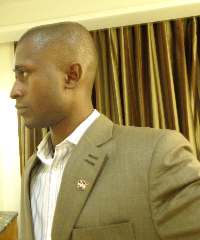
By Olawale Oluwafemi (Femi), (Nigerian Space Agency) and DeStaerke Danielle (CNES)
The primary objective of every research project is not only about what you discover but also how do you communicate your discoveries to the interested audience. Delivering either a poster or oral presentation at a scientific meeting is not an easy task, but my passionate friend Danielle and I will present tips that will assist GLOBE Students and Teachers to deliver good scientific presentations.
Plate 1: Femi delivering poster presentation during GLOBE Annual Meeting at Estes Park, ...
Read More »
Posted in:
Curriculum:
STEM
EDUCATION RESEARCH
Event Topics:
GLOBE LEARNING EXPEDITIONS
SCIENCE SYMPOSIA AND FAIRS
COMPETITIONS
GLOBE Science Topics:
MEETINGS/CONFERENCES
GLOBE Working Groups:
SCIENCE WORKING GROUP
EDUCATION WORKING GROUP
News Topics:
VIRTUAL SCIENCE FAIR
MEETINGS
Primary Audience:
TRAINERS
TEACHERS
STUDENTS
SCIENTISTS
Gathering data
Once you have determined what protocols to use for your project, you will need to develop a plan for gathering the data. It might consist of using automated data collection or making your own measurements. Also, it may include finding data taken by others, such as when you compare your observations with those of another GLOBE school.
Automated Data Collection
If you are using an automated data collection device or devices, verify that the data are being recorded properly before your official testing timeframe. You will want to monitor that the data are being ...
Posted in:
Curriculum:
STEM
EDUCATION RESEARCH
SCIENCE AND MATH
TECHNOLOGY
Event Topics:
SCIENCE SYMPOSIA AND FAIRS
GLOBE Science Topics:
SCIENTIST SKILLS
MEETINGS/CONFERENCES
GLOBE Working Groups:
SCIENCE WORKING GROUP
EDUCATION WORKING GROUP
News Topics:
VIRTUAL SCIENCE FAIR
Primary Audience:
TEACHERS
STUDENTS
Teacher's Guide:
SECONDARY: 9-12
MIDDLE: 6-8
By Claudia Caro and Erika Podest
Curiosity is a natural characteristic of all people, especially the young. It is the first step for a child to build knowledge, and I am sure we can all remember as children asking what?, why?, where?, and numerous other questions as we tried to learn new things.
Unfortunately, as children grow up, this natural curiosity slowly fades. Why is this? We don’t exactly know, but it might be that as children grow older they think they know all the answers or because most school systems are structured to teach by providing answers rather than ...
Posted in:
Curriculum:
STEM
EDUCATION RESEARCH
SCIENCE AND MATH
TECHNOLOGY
Event Topics:
SCIENCE SYMPOSIA AND FAIRS
GLOBE Science Topics:
SCIENTIST SKILLS
MEETINGS/CONFERENCES
GLOBE Working Groups:
SCIENCE WORKING GROUP
EDUCATION WORKING GROUP
News Topics:
VIRTUAL SCIENCE FAIR
Primary Audience:
TEACHERS
STUDENTS
Teacher's Guide:
SECONDARY: 9-12
MIDDLE: 6-8
Authors: Claudia Caro and Olawale Oluwafemi (Femi)
Our participation in the International Virtual Science Symposium (IVSS) as judges has allowed us to learn more about the scientific experiences of students involved in the GLOBE Program. As members of the GLOBE Science Working Group with backgrounds in Geography and Biology, we would like to share our findings about the importance of the IVSS in the GLOBE community and give you some advice to empower your participation in this extraordinary yearly event.
Why an International Virtual Science Symposium?
Knowledge ...
Posted in:
Curriculum:
STEM
SCIENCE AND MATH
TECHNOLOGY
Event Topics:
SCIENCE SYMPOSIA AND FAIRS
GLOBE Working Groups:
SCIENCE WORKING GROUP
EDUCATION WORKING GROUP
Primary Audience:
TEACHERS
STUDENTS
COUNTRY COORDINATORS
Teacher's Guide:
SECONDARY: 9-12
MIDDLE: 6-8
GRADE LEVELS
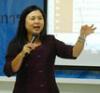
When you start writing your GLOBE report for IVSS, it might be difficult because you might not sure where to start. We tend to start writing the Methods section first because it is something you did it yourselves and it should be relatively easy and straight forward to write. Second, you should write the Results section, do graphs, tables and texts (think of a best way to present your cool data to the whole world). Third, you should start writing the Introduction stating your hypotheses and predictions. The next step would be the Discussion section. It is funny to say but as scientists, ...
Posted in:
Curriculum:
STEM
EDUCATION RESEARCH
SCIENCE AND MATH
TECHNOLOGY
Event Topics:
MEETINGS
SCIENCE SYMPOSIA AND FAIRS
GLOBE Science Topics:
SCIENTIST SKILLS
MEETINGS/CONFERENCES
GLOBE Working Groups:
SCIENCE WORKING GROUP
EDUCATION WORKING GROUP
News Topics:
VIRTUAL SCIENCE FAIR
Primary Audience:
TEACHERS
STUDENTS
Teacher's Guide:
GRADE LEVELS
SECONDARY: 9-12
MIDDLE: 6-8
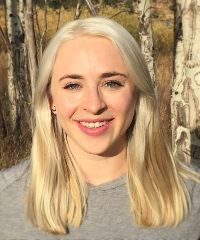
Quaking aspens can grow in a wide range of environmental conditions. They can tolerate a wide variety of variations in climate and environmental conditions including slope, moisture, surrounding vegetation, and soil ( https://www.fs.fed.us/wildflowers/beauty/aspen/ecology.shtml ). I found this information with a simple web search. But, before there was access to infinite articles, websites, and papers all a click away, scientists had to figure out growth trends using data. So, before I decided to do a web search about the environmental conditions of aspen habitats (my memorized aspen ...
Posted in:
Event Topics:
SCIENCE SYMPOSIA AND FAIRS
GLOBE Science Topics:
SCIENTIST SKILLS
Investigation Areas:
EARTH AS A SYSTEM
HYDROSPHERE
PEDOSPHERE (SOIL)
ATMOSPHERE
BIOSPHERE
News Topics:
VIRTUAL SCIENCE FAIR
Primary Audience:
TEACHERS
STUDENTS
As Earth science has a single uncontrolled object of study, the first rule is to take today’s data today. While ice and sediment cores and fossils can reveal past conditions, the observations that can be made right now cannot be replaced by ones taken later. This goes well with the Native American adage, “You can’t step in the same river twice.” The environment is constantly changing and doing so on a wide range of time and space scales.
In a recent video post, Neil deGrasse Tyson said,
“One of the great things about science is that it is an entire exercise finding what is true. You ...
Posted in:
Curriculum:
SCIENCE AND MATH
Event Topics:
CAMPAIGNS AND PROJECTS (IOPS, ETC)
GLOBE LEARNING EXPEDITIONS
SCIENCE SYMPOSIA AND FAIRS
Field Campaigns:
EL NIÑO
SMAP
GLOBE Science Topics:
EARTH AS A SYSTEM
EARTH SYSTEM SCIENCE
GENERAL SCIENCE
CLIMATE CHANGE
CLIMATE
Investigation Areas:
EARTH AS A SYSTEM
Primary Audience:
TEACHERS
STUDENTS
ALUMNI