

Community Blogs
Open social media sharing options menu


Community Blogs
Discover how the GLOBE community is engaging in all things GLOBE through the community blog posts below.
Learn how to create a GLOBE community blog post.
Filter By:
Blogs List
It turns out that we are most likely entering another mild La Niña winter across the globe. This article, “ La Nina Makes a Quiet Return ”, describes how scientists are able to use data on sea surface temperatures from were made by altimeters on the Jason-2 and Jason-3 satellites, and show averaged sea surface height anomalies. Climatologists are predicting that this La Niña should last through the 2017-2018 winter period in the northern hemisphere, and then should change back to neutral conditions by late spring.
Be sure to become a ...
Read More »
Posted in:
Curriculum:
STEM
TECHNOLOGY
SCIENCE AND MATH
Event Topics:
CAMPAIGNS AND PROJECTS (IOPS, ETC)
Field Campaigns:
EL NIÑO
GLOBE Science Topics:
EARTH SYSTEM SCIENCE
CLIMATE CHANGE
BACKYARD SCIENCE
CLIMATE
EARTH AS A SYSTEM
SCIENTIST SKILLS
Investigation Areas:
ATMOSPHERE
EARTH AS A SYSTEM
HYDROSPHERE
PEDOSPHERE (SOIL)
BIOSPHERE
Learning Activities:
EARTH AS A SYSTEM
ATMOSPHERE AND CLIMATE
News Topics:
SCRC RESEARCH
Primary Audience:
PARTNERS
SCIENTISTS
ALUMNI
COUNTRY COORDINATORS
TRAINERS
TEACHERS
STUDENTS
Too much water can have devastating consequences when it falls too quickly on Earth's surface. On January 9th, the " Water in Our Environment " webinar will spotlight the experiences of our GLOBE community in Asia and the Pacific.
Earlier this week in the Philippines, tropical cyclone Kai-Tak wrecked havoc on this region as it caused extreme flooding and landslides .
On December 4th and 5th, tropical cyclone Ockhi was the strongest cyclone to develop in the Arabian Sea since 2015, and it brought intense rainfall to the western part of India.
A recent CNN report stated ...
Posted in:
Curriculum:
STEM
SCIENCE AND MATH
Event Topics:
CAMPAIGNS AND PROJECTS (IOPS, ETC)
Field Campaigns:
WATERSHEDS
EL NIÑO
SMAP
GPM
GLOBE Science Topics:
EARTH SYSTEM SCIENCE
GENERAL SCIENCE
CLIMATE CHANGE
DATA INCLUDED
BACKYARD SCIENCE
CLIMATE
EARTH AS A SYSTEM
SCIENTIST SKILLS
GLOBE PROTOCOLS
Investigation Areas:
ATMOSPHERE
EARTH AS A SYSTEM
HYDROSPHERE
PEDOSPHERE (SOIL)
BIOSPHERE
Learning Activities:
EARTH AS A SYSTEM
ATMOSPHERE AND CLIMATE
LAND COVER/BIOLOGY
HYDROLOGY
SOIL
News Topics:
CALENDAR
TRAINING
Primary Audience:
PARTNERS
SCIENTISTS
ALUMNI
COUNTRY COORDINATORS
TRAINERS
TEACHERS
STUDENTS
Teacher's Guide:
INVESTIGATION AREA DOCUMENTS
Yesterday I had the pleasure of attending a hearing entitled " Gravity Never Sleeps: Landslide Risk Across the Country "at the Rayburn House Office Building that was intended to inform our lawmakers and government officials about the impacts of landslides in many parts of the United States. As the topic is related to our guiding investigative question for the ENSO Student Research Campaign - " What impacts does water, above and below ground, have on our environment? ", I thought I would share some of the things that I learned.
Jonathan Godt, the Landslide Hazard Programs Coordinator ...
Posted in:
Curriculum:
STEM
SCIENCE AND MATH
TECHNOLOGY
Event Topics:
CAMPAIGNS AND PROJECTS (IOPS, ETC)
SCIENCE SYMPOSIA AND FAIRS
Field Campaigns:
EL NIÑO
GLOBE Science Topics:
EARTH SYSTEM SCIENCE
CLIMATE CHANGE
DATA INCLUDED
BACKYARD SCIENCE
CLIMATE
EARTH AS A SYSTEM
SCIENTIST SKILLS
GLOBE PROTOCOLS
GLOBE Working Groups:
EDUCATION WORKING GROUP
Investigation Areas:
ATMOSPHERE
EARTH AS A SYSTEM
HYDROSPHERE
PEDOSPHERE (SOIL)
BIOSPHERE
Learning Activities:
EARTH AS A SYSTEM
ATMOSPHERE AND CLIMATE
LAND COVER/BIOLOGY
HYDROLOGY
SOIL
News Topics:
VIRTUAL SCIENCE FAIR
REGIONS
TRAINING
Primary Audience:
PARTNERS
SCIENTISTS
ALUMNI
COUNTRY COORDINATORS
TRAINERS
TEACHERS
STUDENTS
Learning science involves learning important concepts, conducting experiments to see first-hand how researchers discovered and confirmed some elements of science concepts, and learning how to think scientifically. With this complete approach to learning science, students are well-prepared to deal with the natural world around them and to make wise decisions when confronted with various choices. The ability to think scientifically is a valuable skill in almost all aspects of life and doing science teaches scientific habits of mind.
Students can do science through research projects ...
Posted in:
Curriculum:
STEM
SCIENCE AND MATH
GLOBE Science Topics:
SCIENTIST SKILLS
GENERAL SCIENCE
BACKYARD SCIENCE
GLOBE Working Groups:
SCIENCE WORKING GROUP
Investigation Areas:
ATMOSPHERE
EARTH AS A SYSTEM
HYDROSPHERE
PEDOSPHERE (SOIL)
BIOSPHERE
News Topics:
VIRTUAL SCIENCE FAIR
COMPETITIONS
Primary Audience:
TEACHERS
STUDENTS
PARTNERS
COUNTRY COORDINATORS
Gathering data
Once you have determined what protocols to use for your project, you will need to develop a plan for gathering the data. It might consist of using automated data collection or making your own measurements. Also, it may include finding data taken by others, such as when you compare your observations with those of another GLOBE school.
Automated Data Collection
If you are using an automated data collection device or devices, verify that the data are being recorded properly before your official testing timeframe. You will want to monitor that the data are being ...
Posted in:
Curriculum:
STEM
EDUCATION RESEARCH
SCIENCE AND MATH
TECHNOLOGY
Event Topics:
SCIENCE SYMPOSIA AND FAIRS
GLOBE Science Topics:
SCIENTIST SKILLS
MEETINGS/CONFERENCES
GLOBE Working Groups:
SCIENCE WORKING GROUP
EDUCATION WORKING GROUP
News Topics:
VIRTUAL SCIENCE FAIR
Primary Audience:
TEACHERS
STUDENTS
Teacher's Guide:
SECONDARY: 9-12
MIDDLE: 6-8
Sometimes, actually most of the time, I forget to be grateful for the fact that I have easy access to clean freshwater. When Thanksgiving rolls around each year, I try to step back and consider the many things I have to be thankful for. Day after day I work with the amazing science team behind the Global Precipitation Measurement mission, and I never cease to be completely amazed at how technology has enabled us to monitor our home planet.
During our last ENSO Phase III webinar, we learned about water quality in Europe from several GLOBE scientists, teachers, and students ...
Posted in:
Curriculum:
STEM
LANGUAGE CULTURE AND ARTS
SCIENCE AND MATH
TECHNOLOGY
Event Topics:
CAMPAIGNS AND PROJECTS (IOPS, ETC)
Field Campaigns:
EL NIÑO
WATERSHEDS
GLOBE Science Topics:
EARTH AS A SYSTEM
SCIENTIST SKILLS
EARTH SYSTEM SCIENCE
CLIMATE CHANGE
DATA INCLUDED
CLIMATE
GLOBE Working Groups:
EDUCATION WORKING GROUP
Investigation Areas:
ATMOSPHERE
EARTH AS A SYSTEM
HYDROSPHERE
BIOSPHERE
Learning Activities:
EARTH AS A SYSTEM
ATMOSPHERE AND CLIMATE
LAND COVER/BIOLOGY
HYDROLOGY
Primary Audience:
TEACHERS
STUDENTS
SCIENTISTS
Prepare your Research Plan
Prof. Constantinos Cartalis (University of Athens)
___________________________________________________________________________
The selection of the research strategy for the formulation of your research plan is probably the most important decision to be made. The choice of the strategy, whether analytical, experimental, descriptive or a combination of these, depends on several inter-correlated parameters and preconditions. Broadly speaking a research plan has four main points:
explanation of proposed research ( what will be done) ...
Posted in:
Curriculum:
STEM
EDUCATION RESEARCH
SCIENCE AND MATH
TECHNOLOGY
Event Topics:
SCIENCE SYMPOSIA AND FAIRS
GLOBE Science Topics:
SCIENTIST SKILLS
MEETINGS/CONFERENCES
GLOBE Working Groups:
SCIENCE WORKING GROUP
EDUCATION WORKING GROUP
News Topics:
VIRTUAL SCIENCE FAIR
Primary Audience:
TEACHERS
STUDENTS
Teacher's Guide:
SECONDARY: 9-12
MIDDLE: 6-8
GRADE LEVELS
By Claudia Caro and Erika Podest
Curiosity is a natural characteristic of all people, especially the young. It is the first step for a child to build knowledge, and I am sure we can all remember as children asking what?, why?, where?, and numerous other questions as we tried to learn new things.
Unfortunately, as children grow up, this natural curiosity slowly fades. Why is this? We don’t exactly know, but it might be that as children grow older they think they know all the answers or because most school systems are structured to teach by providing answers rather than ...
Posted in:
Curriculum:
STEM
EDUCATION RESEARCH
SCIENCE AND MATH
TECHNOLOGY
Event Topics:
SCIENCE SYMPOSIA AND FAIRS
GLOBE Science Topics:
SCIENTIST SKILLS
MEETINGS/CONFERENCES
GLOBE Working Groups:
SCIENCE WORKING GROUP
EDUCATION WORKING GROUP
News Topics:
VIRTUAL SCIENCE FAIR
Primary Audience:
TEACHERS
STUDENTS
Teacher's Guide:
SECONDARY: 9-12
MIDDLE: 6-8
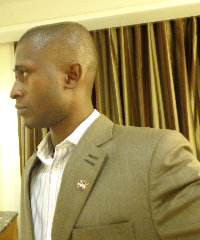
Authors: Claudia Caro and Olawale Oluwafemi (Femi)
Our participation in the International Virtual Science Symposium (IVSS) as judges has allowed us to learn more about the scientific experiences of students involved in the GLOBE Program. As members of the GLOBE Science Working Group with backgrounds in Geography and Biology, we would like to share our findings about the importance of the IVSS in the GLOBE community and give you some advice to empower your participation in this extraordinary yearly event.
Why an International Virtual Science Symposium?
Knowledge ...
Posted in:
Curriculum:
STEM
SCIENCE AND MATH
TECHNOLOGY
Event Topics:
SCIENCE SYMPOSIA AND FAIRS
GLOBE Working Groups:
SCIENCE WORKING GROUP
EDUCATION WORKING GROUP
Primary Audience:
TEACHERS
STUDENTS
COUNTRY COORDINATORS
Teacher's Guide:
SECONDARY: 9-12
MIDDLE: 6-8
GRADE LEVELS
When you start writing your GLOBE report for IVSS, it might be difficult because you might not sure where to start. We tend to start writing the Methods section first because it is something you did it yourselves and it should be relatively easy and straight forward to write. Second, you should write the Results section, do graphs, tables and texts (think of a best way to present your cool data to the whole world). Third, you should start writing the Introduction stating your hypotheses and predictions. The next step would be the Discussion section. It is funny to say but as scientists, ...
Posted in:
Curriculum:
STEM
EDUCATION RESEARCH
SCIENCE AND MATH
TECHNOLOGY
Event Topics:
MEETINGS
SCIENCE SYMPOSIA AND FAIRS
GLOBE Science Topics:
SCIENTIST SKILLS
MEETINGS/CONFERENCES
GLOBE Working Groups:
SCIENCE WORKING GROUP
EDUCATION WORKING GROUP
News Topics:
VIRTUAL SCIENCE FAIR
Primary Audience:
TEACHERS
STUDENTS
Teacher's Guide:
GRADE LEVELS
SECONDARY: 9-12
MIDDLE: 6-8
Many of us are so used to having clean freshwater that is easily accessible that we don't often stop to marvel at the fact that we are incredibly fortunate. The majority of our freshwater comes from our water cycle, and precipitation is unevenly distributed across the globe. You can learn more about the importance of clean freshwater resources in this "one-pager" entitled " Precious Freshness ".
During our ENSO Phase III Webinar #3, we will be focusing on water quality in Europe and Eurasia. We will host this webinar at 18:30 UCT, and hope we will have many of you from ...
Posted in:
Curriculum:
SCIENCE AND MATH
LANGUAGE CULTURE AND ARTS
STEM
Event Topics:
CAMPAIGNS AND PROJECTS (IOPS, ETC)
SCIENCE SYMPOSIA AND FAIRS
Field Campaigns:
WATERSHEDS
EL NIÑO
GLOBE Science Topics:
GENERAL SCIENCE
EARTH AS A SYSTEM
SCIENTIST SKILLS
GLOBE PROTOCOLS
GLOBE Working Groups:
EDUCATION WORKING GROUP
SCIENCE WORKING GROUP
Investigation Areas:
HYDROSPHERE
Learning Activities:
ATMOSPHERE AND CLIMATE
HYDROLOGY
News Topics:
VIRTUAL SCIENCE FAIR
SCRC RESEARCH
Primary Audience:
PARTNERS
SCIENTISTS
ALUMNI
COUNTRY COORDINATORS
TRAINERS
TEACHERS
STUDENTS
What are the impacts of extreme events, like Hurricane Harvey, on the water quality? This article from the Smithsonian magazine describes multiple ways in which public health officials are responding to several threats facing residents of Houston and surrounding locations. These threats include the impact of mold, the potential of an increase in vector-borne diseases such as Zika and West Nile virus, and the problems of contaminants left behind in the public water supply.
Have you experienced severe flooding in your region that resulted in problems with water quality? ...
Posted in:
Curriculum:
STEM
SCIENCE AND MATH
Event Topics:
CAMPAIGNS AND PROJECTS (IOPS, ETC)
SCIENCE SYMPOSIA AND FAIRS
Field Campaigns:
EL NIÑO
WATERSHEDS
GLOBE Science Topics:
EARTH AS A SYSTEM
CLIMATE CHANGE
BACKYARD SCIENCE
CLIMATE
Investigation Areas:
ATMOSPHERE
EARTH AS A SYSTEM
HYDROSPHERE
PEDOSPHERE (SOIL)
BIOSPHERE
News Topics:
SCRC RESEARCH
One way to teach students about water quality and/or how scientists go about their work is to share articles with them. Here is a great article entitled " Study Maps Hidden Water Pollution in U.S. Coastal Areas ". This research shows a great example of the use of both NASA satellite data and ground-based data. In this study, the researchers used U.S. topographic data as well as NASA climate models to "identify key inland regions that contribute groundwater and contaminants to the coast. They examined rainfall, evaporation rates and the amount of known surface runoff to ...
Posted in:
Curriculum:
STEM
SCIENCE AND MATH
Event Topics:
CAMPAIGNS AND PROJECTS (IOPS, ETC)
SCIENCE SYMPOSIA AND FAIRS
Field Campaigns:
EL NIÑO
GLOBE Science Topics:
EARTH AS A SYSTEM
EARTH SYSTEM SCIENCE
SCIENTIST SKILLS
CLIMATE CHANGE
DATA INCLUDED
CLIMATE
Investigation Areas:
EARTH AS A SYSTEM
HYDROSPHERE
Learning Activities:
EARTH AS A SYSTEM
ATMOSPHERE AND CLIMATE
HYDROLOGY
It is pretty neat when you can get two for the price of one- as most teachers can attest to with regard to trying to get everything into their curriculum. Did you know that this year, the FIRST LEGO League's challenge is focused on water. And what could be better, as that water is also the theme of this year's ENSO Student Research Campaign !
The LEGO Challenge Project states: "People use water every day, but they don’t think much about how and why they use water. Whether it’s directly (drinking or washing) or indirectly (manufacturing the products they use or producing food ...
Posted in:
Curriculum:
STEM
SCIENCE AND MATH
Event Topics:
CAMPAIGNS AND PROJECTS (IOPS, ETC)
SCIENCE SYMPOSIA AND FAIRS
COMPETITIONS
Field Campaigns:
EL NIÑO
WATERSHEDS
GPM
GLOBE Science Topics:
EARTH AS A SYSTEM
EARTH SYSTEM SCIENCE
GLOBE PROTOCOLS
CLIMATE CHANGE
CLIMATE
Investigation Areas:
ATMOSPHERE
Learning Activities:
EARTH AS A SYSTEM
ATMOSPHERE AND CLIMATE
News Topics:
COMPETITIONS
Primary Audience:
TEACHERS
STUDENTS
One of the things I do as a GLOBE partner is facilitate workshops for educators. When I facilitate a workshop for credit, I always require a short reflection. I use reflection because when teachers, like all of us, stop and think about what they learned the learning is deeper and more relevant. And, candidly, they are more likely to implement GLOBE into their classrooms.
To give participants direction in their reflecting, I use the 4 R model of reflection: review, relate, remark, revise.
- Review. Participants review and summarize one salient aspect of the workshop . ...
Posted in:
Curriculum:
ASSESSMENT AND EVALUATION
LANGUAGE CULTURE AND ARTS
SCIENCE AND MATH
Event Topics:
WORKSHOPS
GLOBE Science Topics:
GLOBE PROTOCOLS
Investigation Areas:
CLOUDS
Learning Activities:
CLOUD WATCH
OBSERVING, DESCRIBING, AND IDENTIFYING CLOUDS
ESTIMATING CLOUD COVER
Primary Audience:
TRAINERS
TEACHERS
PARTNERS
COUNTRY COORDINATORS
Teacher's Guide:
UPPER PRIMARY: 3-5
I was selected as a National Geographic 2017 Grosvenor Teacher Fellow which is a professional development opportunity that provides educators a rich, immersive experience exploring the world to bring back to their teaching and communities. I and two other educators traveled with Lindblad Expeditions around Svalbard, Greenland and Iceland on the ship the National Geographic Explorer, making stops for excursions along the way.
I decided to do field work on my Grosvenor Teacher Fellowship because 1) that is what one does on an expedition according ...
Posted in:
Curriculum:
SCIENCE AND MATH
GLOBE Science Topics:
EARTH SYSTEM SCIENCE
GLOBE PROTOCOLS
Learning Activities:
ATMOSPHERE AND CLIMATE
Primary Audience:
TRAINERS
TEACHERS
STUDENTS
PARTNERS
SCIENTISTS
ALUMNI
COUNTRY COORDINATORS
https://docs.google.com/forms/d/e/1FAIpQLSc3kwd0hHXG--39z2ADxi7-blg11wAx1RUG42GVHgsG12BP6g/viewform?c=0&w=1 Did you know that mosquito-borne diseases are impacted by both the El Nino and the La Nina weather patterns? Tonight during the ENSO Student Research Campaign Webinar #10 (at 8 pm EST) Dr. Assaf Anyamba will share the results of his research on the impact of these different patterns on the onset of Rift Valley fever in parts of Africa. As we know, these changing weather patterns alter the normal climatic conditions for regions around the world. In some places, this results in ...
Posted in:
Curriculum:
STEM
EDUCATION RESEARCH
SCIENCE AND MATH
TECHNOLOGY
Event Topics:
CAMPAIGNS AND PROJECTS (IOPS, ETC)
Field Campaigns:
EL NIÑO
GLOBE Science Topics:
EARTH SYSTEM SCIENCE
SCIENTIST SKILLS
CLIMATE CHANGE
CLIMATE
Investigation Areas:
ATMOSPHERE
EARTH AS A SYSTEM
HYDROSPHERE
PEDOSPHERE (SOIL)
BIOSPHERE
Learning Activities:
EARTH AS A SYSTEM
Primary Audience:
TRAINERS
TEACHERS
SCIENTISTS
As Earth science has a single uncontrolled object of study, the first rule is to take today’s data today. While ice and sediment cores and fossils can reveal past conditions, the observations that can be made right now cannot be replaced by ones taken later. This goes well with the Native American adage, “You can’t step in the same river twice.” The environment is constantly changing and doing so on a wide range of time and space scales.
In a recent video post, Neil deGrasse Tyson said,
“One of the great things about science is that it is an entire exercise finding what is true. You ...
Posted in:
Curriculum:
SCIENCE AND MATH
Event Topics:
CAMPAIGNS AND PROJECTS (IOPS, ETC)
GLOBE LEARNING EXPEDITIONS
SCIENCE SYMPOSIA AND FAIRS
Field Campaigns:
EL NIÑO
SMAP
GLOBE Science Topics:
EARTH AS A SYSTEM
EARTH SYSTEM SCIENCE
GENERAL SCIENCE
CLIMATE CHANGE
CLIMATE
Investigation Areas:
EARTH AS A SYSTEM
Primary Audience:
TEACHERS
STUDENTS
ALUMNI

Scientists rely on research, statistical models, and climate forecast models to help them determine upcoming natural events.
Currently, scientists are have a difficult time deciding if and when the potential big El Niño event will happen. It will happen in 2017, but will it be the Summer or Fall?
"Right now, many climate forecast models do predict the development of a full-fledged El Niño during this summer or fall. It’s likely that these models are acting on the much warmer-than-average waters near the coast of South America—the “Coastal El Niño" says Anthony Barson in his NOAA ...
Posted in:
Curriculum:
STEM
ASSESSMENT AND EVALUATION
EDUCATION RESEARCH
LANGUAGE CULTURE AND ARTS
SCIENCE AND MATH
TECHNOLOGY
Field Campaigns:
EL NIÑO
SMAP
Investigation Areas:
ATMOSPHERE
EARTH AS A SYSTEM
HYDROSPHERE
PEDOSPHERE (SOIL)
BIOSPHERE
Learning Activities:
EARTH AS A SYSTEM
ATMOSPHERE AND CLIMATE
LAND COVER/BIOLOGY
HYDROLOGY
SOIL
Primary Audience:
PARTNERS
SCIENTISTS
ALUMNI
COUNTRY COORDINATORS
TRAINERS
TEACHERS
STUDENTS
Just when you think that perhaps the weather systems are settling down- our amazing scientific instruments are able to detect a potential change! I never cease to be amazed at what we are able to learn about Earth's systems- both from the ground and from space!
This article from the New York Times just came across my newsfeed- " It's Like it Never Left: Another El Nino May be on the Way ".
In the article, it states that " Among the potential effects are wetter conditions across the southern United States, including Southern California; a drier Midwest; and drought in ...
Posted in:
Curriculum:
STEM
EDUCATION RESEARCH
SCIENCE AND MATH
Event Topics:
CAMPAIGNS AND PROJECTS (IOPS, ETC)
Field Campaigns:
EL NIÑO
GLOBE Science Topics:
EARTH SYSTEM SCIENCE
CLIMATE CHANGE
BACKYARD SCIENCE
CLIMATE
EARTH AS A SYSTEM
SCIENTIST SKILLS
GLOBE PROTOCOLS
GLOBE Working Groups:
EDUCATION WORKING GROUP
Investigation Areas:
ATMOSPHERE
EARTH AS A SYSTEM
HYDROSPHERE
PEDOSPHERE (SOIL)
BIOSPHERE
News Topics:
VIRTUAL SCIENCE FAIR
Primary Audience:
PARTNERS
SCIENTISTS
ALUMNI
COUNTRY COORDINATORS
TRAINERS
TEACHERS
STUDENTS
—
20 Items per Page