

Community Blogs
Open social media sharing options menu


Community Blogs
Discover how the GLOBE community is engaging in all things GLOBE through the community blog posts below.
Learn how to create a GLOBE community blog post.
Filter By:
Blogs List
Our project for SEES 2024 was "Creating a Model to Identify
High-Risk Areas for Flash Flooding in Houston, Texas." In this
blog, I will discuss how we calculated which areas are "high-risk."
There are many ways to identify the most at-risk points of flooding
in a given region. Such points are commonly identified in a flood map,
such as the one here:
For our project, we decided to look at elevation data, which is
perhaps the most intuitive: water flows downhill and will accumulate
in the lowest regions. To get our elevation data, we used ...
Read More »
Posted in:
GLOBE Science Topics:
CLIMATE CHANGE
EARTH AS A SYSTEM
EARTH SYSTEM SCIENCE
Investigation Areas:
EARTH AS A SYSTEM
BIOSPHERE
LAND COVER CLASSIFICATION
Primary Audience:
SCIENTISTS
STUDENTS
TEACHERS
Student Research Reports:
MISSION MOSQUITO REPORT
SEES 2024 Experience
Getting the opportunity to participate in the NASA SEES Earth System
Explorers program has positively impacted my educational and career
journey in more ways than I could've imagined. Throughout this
internship, I gained an immense amount of knowledge in Earth science,
utilizing the GLOBE Observer app, ArcGIS, Collect Earth Online,
Python, and many other tools to better understand the environment
around us. During the last few weeks of the program, a team of seven
other interns and I completed our own research project called
"Harnessing ...
Posted in:
GLOBE Science Topics:
EARTH AS A SYSTEM
Investigation Areas:
EARTH AS A SYSTEM
LAND COVER CLASSIFICATION
MOSQUITOES
Primary Audience:
SCIENTISTS
STUDENTS
TEACHERS
Student Research Reports:
MISSION MOSQUITO REPORT
If you had asked me what “citizen science” was before this internship
with the NASA SEES ( STEM Enhancement in Earth Science ) Earth System
Explorers, I most likely would have conjured a description that
involved studying the human body. Now, however, I feel confident in
saying that citizen science is a dynamic, extraordinary meaningful
process by which everyday citizens contribute to real-world scientific
research. This internship allowed me to take on the roles of both a
citizen scientist and a researcher, deeply engaging with my local
community and environment while ...
Posted in:
GLOBE Science Topics:
DATA INCLUDED
EARTH AS A SYSTEM
Investigation Areas:
EARTH AS A SYSTEM
Primary Audience:
PARTNERS
SCIENTISTS
STUDENTS
TEACHERS
Student Research Reports:
MISSION MOSQUITO REPORT
The wildfire data analysis journey began with a dataset comprising
over 1200 points located in the California region. To uncover the
correlation between land cover types and wildfire risk, we first
needed to determine the wildfire risk for each point using the FEMA
Wildfire Risk Map. This step involved entering coordinates into the
software to obtain the wildfire risk index for each location. From
this dataset, we categorized approximately 325 points as having a very
low risk, 350 as moderate risk, and 578 as very high risk for
wildfires. These categories served as the ...
Posted in:
GLOBE Science Topics:
EARTH AS A SYSTEM
Investigation Areas:
EARTH AS A SYSTEM
LAND COVER CLASSIFICATION
Primary Audience:
SCIENTISTS
STUDENTS
TEACHERS
Student Research Reports:
MISSION MOSQUITO REPORT
My group’s project focused on using land cover data and GLOBE
Observer images to create a machine learning model that can predict
land surface temperature - a measure of how hot the surface of the
Earth feels in a given location. For context, GLOBE is short for
“Global Learning and Observations to Benefit the Environment”. It’s an
app that lets volunteers across the world take observations of their
local community (these could be of cloud cover, land cover, or
mosquito habitats) and these observations help scientists track
changes in the environment. It’s part of a wider ...
Posted in:
GLOBE Science Topics:
EARTH AS A SYSTEM
Investigation Areas:
HYDROSPHERE
EARTH AS A SYSTEM
MOSQUITOES
Learning Activities:
EARTH AS A SYSTEM
LAND COVER/BIOLOGY
Primary Audience:
PARTNERS
STUDENTS
TEACHERS
Student Research Reports:
MISSION MOSQUITO REPORT
Roboflow is an open-source dataset management platform, where users
can import data, label it, and then have a model train on it. For my
group's project, CS-FLARE, we used Roboflow to label brush, grass,
trees, and leaf litter in our NESW Images as shown below.
When I initially began labeling images, I tried
using bounding boxes for each picture like the leaf litter in the
image above. This became a bit annoying as sometimes the bounding
boxes would cut parts of objects like trees, but it was still faster
than using the polygon tool to manually trace around objects. ...
Posted in:
Investigation Areas:
EARTH AS A SYSTEM
LAND COVER CLASSIFICATION
MOSQUITOES
Primary Audience:
STUDENTS
TEACHERS
Student Research Reports:
MISSION MOSQUITO REPORT
Background
I received my formal training on GLOBE Atmosphere protocols, particularly cloud observation, in the summer of 2011. In 2016, the GLOBE Program launched the GLOBE Observer (GO) app, designed for volunteer science. The GO app is more user-friendly and focuses on specific observations anyone with a smartphone can make.
The GLOBE Program is structured and education-focused, targeting students and educators, while the GO app is intuitive and accessible to the general public. Both contribute valuable data to the scientific community and enhance public understanding of ...
Posted in:
Curriculum:
SCIENCE AND MATH
TECHNOLOGY
STEM
GLOBE Mission Earth News:
TEACHER STORIES
PROFESSIONAL DEVELOPMENT
STUDENT RESEARCH & ACTIVITIES
GENERAL ACTIVITIES
GLOBE Science Topics:
BACKYARD SCIENCE
CLIMATE
GENERAL SCIENCE
GLOBE PROTOCOLS
EARTH AS A SYSTEM
SCIENTIST SKILLS
Investigation Areas:
ATMOSPHERE
CLOUDS
EARTH AS A SYSTEM
Learning Activities:
ATMOSPHERE AND CLIMATE
EARTH AS A SYSTEM
OBSERVING, DESCRIBING, AND IDENTIFYING CLOUDS
ESTIMATING CLOUD COVER
OBSERVING VISIBILITY AND SKY COLOR
CLOUD WATCH
LEARNING TO USE VISUALIZATIONS
CLOUD FUN
CLOUDSCAPE
TO SPREAD OR NOT TO SPREAD
WE'RE ALL CONNECTED: EARTH SYSTEM INTERACTIONS
RESEARCH: INQUIRE & DISCOVER
DATA COLLECTION: OBSERVE & MEASURE
DATA EXPLORATION: ANALYZE & CHART
SIMULATIONS: PLAY & LEARN
OUTDOOR: EXPLORE & CONNECT
News Topics:
TRAINING
NEWS BRIEFS
TEACHER STORIES
PROFESSIONAL DEVELOPMENT
GENERAL ACTIVITIES
Primary Audience:
ALUMNI
COUNTRY COORDINATORS
PARTNERS
SCIENTISTS
STUDENTS
TEACHERS
TRAINERS
Teacher's Guide:
GRADE LEVELS
MISCELLANEOUS
PROTOCOL INSTRUCTIONS
INTRODUCTION
ATMOSPHERE
SUPPORTING CLOUDS
EARTH AS A SYSTEM
The first time I have ever witnessed a solar eclipse was on March 29, 2006, in the southwestern part of Nigeria. As an undergraduate student who majored in Geography, I was curious to know how the celestial event would happen. Indeed, I was able to witness the partial solar eclipse which was an awe-inspiring celestial event, but was not opportune to study the effect of the unique phenomena on my local environment. When I read online late last year that the total solar eclipse will pass through Toledo, Ohio in the United States where I reside presently, I thought this might be a rare ...
Posted in:
Curriculum:
STEM
Field Campaigns:
SURFACE TEMPERATURE
GLOBE International STEM Network (GISN):
GLOBE INTERNATIONAL STEM NETWORK (GISN)
GLOBE Mission Earth News:
STUDENT RESEARCH & ACTIVITIES
Learning Activities:
ATMOSPHERE AND CLIMATE
Primary Audience:
SCIENTISTS
STUDENTS
TEACHERS
Student Research Reports:
MISSION EARTH REPORT
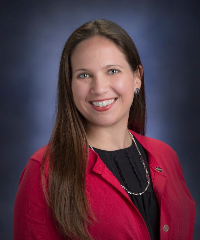
The GLOBE Clouds team is delighted to announce this new section that showcases sky and cloud photographs from around the world! We’ve also been receiving some amazing questions from students.
The featured question was asked by students from Corpus Christi Catholic School :
Question: Why can we see clouds but not evaporation?
Answer: Water vapor is invisible. However, the water in clouds is in liquid or solid state, not gas.
Do you have a favorite cloud photo or a question for the team? Use the linked form to cast your vote and ask us any question ...
Posted in:
Curriculum:
STEM
GLOBE Science Topics:
BACKYARD SCIENCE
CLIMATE
CLIMATE CHANGE
GENERAL SCIENCE
GENERAL SCIENCE @ES
EARTH AS A SYSTEM
EARTH SYSTEM SCIENCE
Investigation Areas:
ATMOSPHERE
EARTH AS A SYSTEM
News Topics:
NEWS BRIEFS
Primary Audience:
ALUMNI
COUNTRY COORDINATORS
PARTNERS
SCIENTISTS
STUDENTS
TEACHERS
TRAINERS
Waleska works with in-service teachers in the teacher training programs of the Galileo University and the University of San Carlos of Guatemala. She is the founder and coordinator of the STEAM program
Question: Where are you from?
Answer: I was born in the city of the eternal Spring, Guatemala City, in Central America, several eclipses, comets, and moons ago.
Question: What inspired you to work in this field?
Answer: Since I was little I had a fascination with natural phenomena, the reason why stars shine led me to be a Physicist, and fireflies and ...
Posted in:
Curriculum:
STEM
GLOBE Science Topics:
BACKYARD SCIENCE
CLIMATE
CLIMATE CHANGE
DATA INCLUDED
GENERAL SCIENCE
GENERAL SCIENCE @ES
SCIENTIST SKILLS
Investigation Areas:
ATMOSPHERE
EARTH AS A SYSTEM
Primary Audience:
ALUMNI
COUNTRY COORDINATORS
PARTNERS
SCIENTISTS
STUDENTS
TEACHERS
TRAINERS
Brad Hegyi is a research scientist for the NASA Prediction of Worldwide Energy Resources (POWER) project team at Langley Research Center in Hampton, Virginia, USA. Brad develops metrics and statistics for POWER from model estimates of future climate to help support planning for future energy use by heating and cooling systems in buildings. Brad also helps create interactive data products to better visualize changes occurring in the climate data.
The energy that comes from the Sun is the basic source of energy for everything on Earth. Solar energy drives Earth’s weather and ...
Posted in:
Curriculum:
TECHNOLOGY
STEM
GLOBE Science Topics:
BACKYARD SCIENCE
CLIMATE
CLIMATE CHANGE
DATA INCLUDED
GENERAL SCIENCE
EARTH AS A SYSTEM
EARTH SYSTEM SCIENCE
SCIENTIST SKILLS
Investigation Areas:
ATMOSPHERE
EARTH AS A SYSTEM
Primary Audience:
ALUMNI
COUNTRY COORDINATORS
PARTNERS
SCIENTISTS
STUDENTS
TEACHERS
TRAINERS
Energy from the Sun warms our planet, and changes in sunlight can also cause changes in temperature, clouds, and wind. Clouds are ever changing and give you clues and information on what is happening in the atmosphere. Eclipses provide a natural experiment, in which the Sun’s light is blocked from Earth for a brief period in time, allowing us to observe the effects of that sudden change. Read the newly released blog post explaining in depth cloud formation and which ones would be impacted by the upcoming total solar eclipse over North America and how the data will be used. ...
Posted in:
Curriculum:
STEM
GLOBE Science Topics:
BACKYARD SCIENCE
CLIMATE
CLIMATE CHANGE
GLOBE PROTOCOLS
EARTH AS A SYSTEM
Investigation Areas:
ATMOSPHERE
CLOUDS
EARTH AS A SYSTEM
Primary Audience:
ALUMNI
COUNTRY COORDINATORS
PARTNERS
SCIENTISTS
STUDENTS
TEACHERS
TRAINERS
The NASA GLOBE Clouds Quarterly Update is available for December, January, February 2023-2024!
Coming Soon: Cloud Challenge 2024
The team is excited to announce that in 2024 we will have a Cloud Challenge focused on how clouds change throughout the day.
First Long-Duration Lidar Satellite Mission CALIPSO Ends
CALIPSO (Cloud-Aerosol Lidar and Infrared Pathfinder Satellite Observations), a lidar satellite that advanced the world’s understanding of climate, weather, and air quality, ended its scientific mission on August 1, 2023 after 17 years of operation.
Meet an ...
Posted in:
GLOBE Science Topics:
BACKYARD SCIENCE
CLIMATE
CLIMATE CHANGE
GLOBE PROTOCOLS
Investigation Areas:
ATMOSPHERE
CLOUDS
News Topics:
NEWS BRIEFS
Primary Audience:
ALUMNI
COUNTRY COORDINATORS
PARTNERS
SCIENTISTS
STUDENTS
TEACHERS
TRAINERS
For the past three years, the GLOBE Mission Earth (GME) Team at the University of Toledo, Ohio has been teaching and mentoring NASA-SEES high school students across the United States in the study of the Urban Heat Island Effect (UHIE) and Air Quality. In 2023, the NASA-SEES High School Virtual Internship Program had 20 interns for both the UHIE and Air Quality Groups.
During the 6-week virtual training, interns conducted research on the topics of their choice and met virtually three times a week to complete their projects. They also completed weekly assignments.
For the UHIE ...
Posted in:
Curriculum:
EDUCATION RESEARCH
STEM
GLOBE Working Groups:
EVALUATION WORKING GROUP
SCIENCE WORKING GROUP
EDUCATION WORKING GROUP
TECHNOLOGY WORKING GROUP
Investigation Areas:
ATMOSPHERE
HYDROSPHERE
EARTH AS A SYSTEM
PEDOSPHERE (SOIL)
BIOSPHERE
Primary Audience:
COUNTRY COORDINATORS
PARTNERS
SCIENTISTS
STUDENTS
TEACHERS
TRAINERS
Student Research Reports:
U.S. STUDENT RESEARCH SYMPOSIA (SRS)
MISSION EARTH REPORT
Adopt-a-Pixel | Where does water meet land in my community?
Scanning the Area
As our first assignment as part of the Earth System Explorers team, we've been tasked with making our first observations using the GLOBE Observer App. The goal was to make 12 total observations (6 Potential Mosquito Habitat & 6 Land Cover).
To be more efficient, I decided to make all of my observations at 6 different still bodies of water. This way I could do a MHM and a LC observation at each location.
Before I began, I scouted potential bodies of water on Global Surface Water ...
Posted in:
Investigation Areas:
EARTH AS A SYSTEM
LAND COVER CLASSIFICATION
MOSQUITOES
Primary Audience:
STUDENTS
TEACHERS
TRAINERS
I built my mosquito traps on June 20th and ran the experiment until July 15th. I collected a total of 15 observations during this period. To construct the traps I used three identical pots to hold water. The goal of my experiment was to find which type of mosquito bait would be the most effective at attracting and sheltering mosquitos. For the three baits I used dried leaves, grass clippings, and a wooden plank. I chose these three baits because they represent possible real life environments that mosquitos may breed in. The dried leaves simulates a pool of water that does not evaporate ...
Posted in:
Investigation Areas:
HYDROSPHERE
EARTH AS A SYSTEM
LAND COVER CLASSIFICATION
MOSQUITOES
Primary Audience:
STUDENTS
TEACHERS
TRAINERS
My mosquito trap was definitely a rollercoaster, and with this being the last required update, I still plan on seeing how the traps do after the internship finishes since this has been really interesting. To give some background, I set out three traps around 30-40 yards away from each other around my AOI so I could get an idea of how different areas may yield different results. The first trap was in my backyard, the second trap was in a park close to my house, and the third was by a sidewalk (the pictures I use are from the third trap). The only trap I really had to refill with water was ...
Posted in:
GLOBE Science Topics:
EARTH AS A SYSTEM
Investigation Areas:
LAND COVER CLASSIFICATION
MOSQUITOES
Primary Audience:
STUDENTS
TEACHERS
TRAINERS
Student Research Reports:
INTERNATIONAL VIRTUAL SCIENCE SYMPOSIUM REPORT
MISSION MOSQUITO REPORT
Mosquito Trap
Week 1
For the mosquito traps, I decided quite early on that my independent variable would be the container. I got 3 different containers; an old tire, a black bucket, and a gallon bottle/container while keeping all other factors the same. I used the same bait and the same amount of water and placed all 3 traps in my backyard behind the shade of the t ree. I decided on using a timeframe of about 5 days to take my samples.
Week 1:
Five days had passed, and it was time to sample the traps. Unfortunately, when I got ...
Posted in:
Investigation Areas:
BIOSPHERE
LAND COVER CLASSIFICATION
MOSQUITOES
Primary Audience:
STUDENTS
TEACHERS
TRAINERS
Student Research Reports:
INTERNATIONAL VIRTUAL SCIENCE SYMPOSIUM REPORT
MISSION MOSQUITO REPORT
AOI Fieldwork
At first, collecting land cover data for 37 points within my area of interest felt like a daunting task. However, after only a few "expeditions" in the past week, I was able to complete all 37 observations.
To make my work easier and more accurate, I intentionally choose an AOI that would contain as many points as possible within a nearby park. This was to ensure that I could access as many points as possible. Despite my best efforts, many of the points still landed in residential properties. This activity actually reminded me how many neighborhoods there are in my ...
Posted in:
Investigation Areas:
HYDROSPHERE
EARTH AS A SYSTEM
LAND COVER CLASSIFICATION
MOSQUITOES
Primary Audience:
STUDENTS
TEACHERS
TRAINERS
Student Research Reports:
INTERNATIONAL VIRTUAL SCIENCE SYMPOSIUM REPORT
MISSION MOSQUITO REPORT
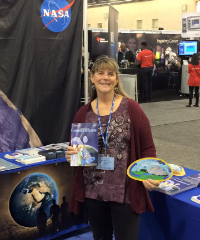
One of the things that I find the most inspiring about The GLOBE Program , is the rich collaboration that it enables us to have with each other. Speaking for myself, I now have friends literally all around the globe, because of my engagement and interaction with GLOBE. I thought I would take a little time to write about a very inspiring intergenerational collaboration that I have found particularly enriching.
During the virtual GLOBE Annual Meeting in 2021, I was asked by a participant if we could meet up in a virtual room and chat. I was astonished to meet the extremely vibrant ...
Posted in:
Curriculum:
EDUCATION RESEARCH
LANGUAGE CULTURE AND ARTS
SCIENCE AND MATH
TECHNOLOGY
STEM
Field Campaigns:
GPM
GLOBE International STEM Network (GISN):
GLOBE INTERNATIONAL STEM NETWORK (GISN)
GLOBE Science Topics:
BACKYARD SCIENCE
CLIMATE
CLIMATE CHANGE
DATA INCLUDED
GENERAL SCIENCE
GLOBE PROTOCOLS
EARTH AS A SYSTEM
EARTH SYSTEM SCIENCE
SCIENTIST SKILLS
MEETINGS/CONFERENCES
Investigation Areas:
ATMOSPHERE
HYDROSPHERE
EARTH AS A SYSTEM
PEDOSPHERE (SOIL)
BIOSPHERE
Learning Activities:
ATMOSPHERE AND CLIMATE
EARTH AS A SYSTEM
HYDROLOGY
LAND COVER/BIOLOGY
SOIL
Primary Audience:
ALUMNI
COUNTRY COORDINATORS
PARTNERS
SCIENTISTS
STUDENTS
TEACHERS
TRAINERS
—
20 Items per Page