

Community Blogs
Open social media sharing options menu


Community Blogs
Discover how the GLOBE community is engaging in all things GLOBE through the community blog posts below.
Learn how to create a GLOBE community blog post.
Filter By:
Blogs List
Too much water can have devastating consequences when it falls too quickly on Earth's surface. On January 9th, the " Water in Our Environment " webinar will spotlight the experiences of our GLOBE community in Asia and the Pacific.
Earlier this week in the Philippines, tropical cyclone Kai-Tak wrecked havoc on this region as it caused extreme flooding and landslides .
On December 4th and 5th, tropical cyclone Ockhi was the strongest cyclone to develop in the Arabian Sea since 2015, and it brought intense rainfall to the western part of India.
A recent CNN report stated ...
Read More »
Posted in:
Curriculum:
STEM
SCIENCE AND MATH
Event Topics:
CAMPAIGNS AND PROJECTS (IOPS, ETC)
Field Campaigns:
WATERSHEDS
EL NIÑO
SMAP
GPM
GLOBE Science Topics:
EARTH SYSTEM SCIENCE
GENERAL SCIENCE
CLIMATE CHANGE
DATA INCLUDED
BACKYARD SCIENCE
CLIMATE
EARTH AS A SYSTEM
SCIENTIST SKILLS
GLOBE PROTOCOLS
Investigation Areas:
ATMOSPHERE
EARTH AS A SYSTEM
HYDROSPHERE
PEDOSPHERE (SOIL)
BIOSPHERE
Learning Activities:
EARTH AS A SYSTEM
ATMOSPHERE AND CLIMATE
LAND COVER/BIOLOGY
HYDROLOGY
SOIL
News Topics:
CALENDAR
TRAINING
Primary Audience:
PARTNERS
SCIENTISTS
ALUMNI
COUNTRY COORDINATORS
TRAINERS
TEACHERS
STUDENTS
Teacher's Guide:
INVESTIGATION AREA DOCUMENTS
The GLOBE Clouds team loves coming up with ways to help students and teachers identify clouds. I've been blessed to visit a number of 4th grade full inclusion classrooms and want to share my quick cloud ID and data collection activity outline!
Anchor question: Do all clouds look the same, even from space?
Goal: Students identify, collect and submit cloud observations by using their own notes and clues for each possible cloud type.
Objectives: Students will,
(A) Recognize that clouds are part of the water cycle.
(B) Investigate cloud types ...
Posted in:
Curriculum:
STEM
GLOBE Science Topics:
SCIENTIST SKILLS
GLOBE PROTOCOLS
Learning Activities:
ATMOSPHERE AND CLIMATE
Primary Audience:
TRAINERS
TEACHERS
Teacher's Guide:
UPPER PRIMARY: 3-5
RESOURCES
Yesterday I had the pleasure of attending a hearing entitled " Gravity Never Sleeps: Landslide Risk Across the Country "at the Rayburn House Office Building that was intended to inform our lawmakers and government officials about the impacts of landslides in many parts of the United States. As the topic is related to our guiding investigative question for the ENSO Student Research Campaign - " What impacts does water, above and below ground, have on our environment? ", I thought I would share some of the things that I learned.
Jonathan Godt, the Landslide Hazard Programs Coordinator ...
Posted in:
Curriculum:
STEM
SCIENCE AND MATH
TECHNOLOGY
Event Topics:
CAMPAIGNS AND PROJECTS (IOPS, ETC)
SCIENCE SYMPOSIA AND FAIRS
Field Campaigns:
EL NIÑO
GLOBE Science Topics:
EARTH SYSTEM SCIENCE
CLIMATE CHANGE
DATA INCLUDED
BACKYARD SCIENCE
CLIMATE
EARTH AS A SYSTEM
SCIENTIST SKILLS
GLOBE PROTOCOLS
GLOBE Working Groups:
EDUCATION WORKING GROUP
Investigation Areas:
ATMOSPHERE
EARTH AS A SYSTEM
HYDROSPHERE
PEDOSPHERE (SOIL)
BIOSPHERE
Learning Activities:
EARTH AS A SYSTEM
ATMOSPHERE AND CLIMATE
LAND COVER/BIOLOGY
HYDROLOGY
SOIL
News Topics:
VIRTUAL SCIENCE FAIR
REGIONS
TRAINING
Primary Audience:
PARTNERS
SCIENTISTS
ALUMNI
COUNTRY COORDINATORS
TRAINERS
TEACHERS
STUDENTS
Currently, Science education has transitioned away from textbooks to more hands on learning. This is an amazing opportunity for teachers to move away from the normal lecturing and explaining in class to reshaping the process of learning.
I think that the GLOBE Program is a fantastic organization and empowered program that promises to give an essential change in education. One example is teaching and learning from directs activities in the field.
An excellent activity is to share data from school to school through collaboration. Students can share what they are ...
Posted in:
Curriculum:
STEM
Event Topics:
OTHER
SCIENCE SYMPOSIA AND FAIRS
GLOBE Science Topics:
EARTH AS A SYSTEM
EARTH SYSTEM SCIENCE
GLOBE PROTOCOLS
GLOBE Working Groups:
EDUCATION WORKING GROUP
Investigation Areas:
ATMOSPHERE
EARTH AS A SYSTEM
HYDROSPHERE
PEDOSPHERE (SOIL)
BIOSPHERE
News Topics:
VIRTUAL SCIENCE FAIR
Primary Audience:
TRAINERS
TEACHERS
STUDENTS
PARTNERS
ALUMNI
COUNTRY COORDINATORS
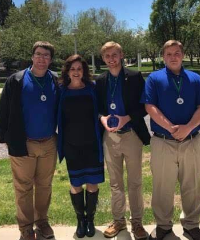
Over the past few years I have been asked how to run a successful international collaboration from school to school. After much thought and reflection I have decided to blog about my experiences and the knowledge I have gained.
As an experienced teacher who has had success with multiple International Collaborations, I would advise you and your GLOBE students to start by getting involved in an existing GLOBE campaign online, rather than trying to start a project of your own. This is a great way to get your feet wet before you dive in.
Participating in other campaign projects is ...
Posted in:
Curriculum:
STEM
Event Topics:
GLOBE LEARNING EXPEDITIONS
SCIENCE SYMPOSIA AND FAIRS
Field Campaigns:
SMAP
GPM
GLOBE Science Topics:
GLOBE PROTOCOLS
GLOBE Working Groups:
TECHNOLOGY WORKING GROUP
EVALUATION WORKING GROUP
SCIENCE WORKING GROUP
EDUCATION WORKING GROUP
Primary Audience:
TEACHERS
STUDENTS
ALUMNI
COUNTRY COORDINATORS
Many of us are so used to having clean freshwater that is easily accessible that we don't often stop to marvel at the fact that we are incredibly fortunate. The majority of our freshwater comes from our water cycle, and precipitation is unevenly distributed across the globe. You can learn more about the importance of clean freshwater resources in this "one-pager" entitled " Precious Freshness ".
During our ENSO Phase III Webinar #3, we will be focusing on water quality in Europe and Eurasia. We will host this webinar at 18:30 UCT, and hope we will have many of you from ...
Posted in:
Curriculum:
SCIENCE AND MATH
LANGUAGE CULTURE AND ARTS
STEM
Event Topics:
CAMPAIGNS AND PROJECTS (IOPS, ETC)
SCIENCE SYMPOSIA AND FAIRS
Field Campaigns:
WATERSHEDS
EL NIÑO
GLOBE Science Topics:
GENERAL SCIENCE
EARTH AS A SYSTEM
SCIENTIST SKILLS
GLOBE PROTOCOLS
GLOBE Working Groups:
EDUCATION WORKING GROUP
SCIENCE WORKING GROUP
Investigation Areas:
HYDROSPHERE
Learning Activities:
ATMOSPHERE AND CLIMATE
HYDROLOGY
News Topics:
VIRTUAL SCIENCE FAIR
SCRC RESEARCH
Primary Audience:
PARTNERS
SCIENTISTS
ALUMNI
COUNTRY COORDINATORS
TRAINERS
TEACHERS
STUDENTS
The journal Scientific American just published a blog about GLOBE. The post, titled " The GLOBE Program: Making the Case for K–12 Citizen Scientists " discusses several aspects of GLOBE, including our contributions and campaigns. As well, it helps explain our mission of providing the resources for students across the world to become citizen scientists.
"Contributing to global datasets not only gives students a chance to collect data that scientists can actually use, but allows them to compare their experiences and findings with other students around the world."
To read more ...
Posted in:
Event Topics:
CAMPAIGNS AND PROJECTS (IOPS, ETC)
OTHER
Field Campaigns:
EL NIÑO
SURFACE TEMPERATURE
GLOBE Science Topics:
SCIENTIST SKILLS
GLOBE PROTOCOLS
BACKYARD SCIENCE
Primary Audience:
TRAINERS
TEACHERS
STUDENTS
PARTNERS
SCIENTISTS
ALUMNI
COUNTRY COORDINATORS
It is pretty neat when you can get two for the price of one- as most teachers can attest to with regard to trying to get everything into their curriculum. Did you know that this year, the FIRST LEGO League's challenge is focused on water. And what could be better, as that water is also the theme of this year's ENSO Student Research Campaign !
The LEGO Challenge Project states: "People use water every day, but they don’t think much about how and why they use water. Whether it’s directly (drinking or washing) or indirectly (manufacturing the products they use or producing food ...
Posted in:
Curriculum:
STEM
SCIENCE AND MATH
Event Topics:
CAMPAIGNS AND PROJECTS (IOPS, ETC)
SCIENCE SYMPOSIA AND FAIRS
COMPETITIONS
Field Campaigns:
EL NIÑO
WATERSHEDS
GPM
GLOBE Science Topics:
EARTH AS A SYSTEM
EARTH SYSTEM SCIENCE
GLOBE PROTOCOLS
CLIMATE CHANGE
CLIMATE
Investigation Areas:
ATMOSPHERE
Learning Activities:
EARTH AS A SYSTEM
ATMOSPHERE AND CLIMATE
News Topics:
COMPETITIONS
Primary Audience:
TEACHERS
STUDENTS
Observations of daily precipitation have been a part of GLOBE from the beginning. At the start, GLOBE’s participation model was that schools would take measurement following all of the original 17 protocols. Atmosphere temperature, precipitation, cloud, and soil moisture measurements were to be collected daily at a site easily accessible to the school. A permanent installation of an instrument shelter containing a max/min thermometer mounted to a post along with a rain gauge was the expected norm with other measurements taken nearby. Daily temperature and precipitation measurements were ...
Posted in:
Field Campaigns:
EL NIÑO
GPM
GLOBE Science Topics:
GLOBE PROTOCOLS
GLOBE Working Groups:
SCIENCE WORKING GROUP
EDUCATION WORKING GROUP
Investigation Areas:
ATMOSPHERE
Primary Audience:
TRAINERS
TEACHERS
STUDENTS
PARTNERS
COUNTRY COORDINATORS
Teacher's Guide:
DOCUMENT TYPES
From the start, the measurement of daily maximum and minimum air temperature within one hour of local solar noon has been a key GLOBE protocol. The low cost approach was to use a U-tube thermometer housed in a wooden instrument shelter facing away from the equator. The U-shaped tube contained mercury with pins on either side of the mercury. As the air temperature warmed the pin on one side would move while the other pin stayed in place; when the air cooled, the pin on the other side would be pushed up. The pins were held in place by magnetized strips behind the thermometer tube so that ...
Posted in:
Curriculum:
STEM
TECHNOLOGY
GLOBE Science Topics:
EARTH AS A SYSTEM
EARTH SYSTEM SCIENCE
GLOBE PROTOCOLS
CLIMATE CHANGE
CLIMATE
GLOBE Working Groups:
SCIENCE WORKING GROUP
Investigation Areas:
ATMOSPHERE
Primary Audience:
TEACHERS
TRAINERS
STUDENTS
PARTNERS
SCIENTISTS
ALUMNI
COUNTRY COORDINATORS
One of the things I do as a GLOBE partner is facilitate workshops for educators. When I facilitate a workshop for credit, I always require a short reflection. I use reflection because when teachers, like all of us, stop and think about what they learned the learning is deeper and more relevant. And, candidly, they are more likely to implement GLOBE into their classrooms.
To give participants direction in their reflecting, I use the 4 R model of reflection: review, relate, remark, revise.
- Review. Participants review and summarize one salient aspect of the workshop . ...
Posted in:
Curriculum:
ASSESSMENT AND EVALUATION
LANGUAGE CULTURE AND ARTS
SCIENCE AND MATH
Event Topics:
WORKSHOPS
GLOBE Science Topics:
GLOBE PROTOCOLS
Investigation Areas:
CLOUDS
Learning Activities:
CLOUD WATCH
OBSERVING, DESCRIBING, AND IDENTIFYING CLOUDS
ESTIMATING CLOUD COVER
Primary Audience:
TRAINERS
TEACHERS
PARTNERS
COUNTRY COORDINATORS
Teacher's Guide:
UPPER PRIMARY: 3-5
I was selected as a National Geographic 2017 Grosvenor Teacher Fellow which is a professional development opportunity that provides educators a rich, immersive experience exploring the world to bring back to their teaching and communities. I and two other educators traveled with Lindblad Expeditions around Svalbard, Greenland and Iceland on the ship the National Geographic Explorer, making stops for excursions along the way.
I decided to do field work on my Grosvenor Teacher Fellowship because 1) that is what one does on an expedition according ...
Posted in:
Curriculum:
SCIENCE AND MATH
GLOBE Science Topics:
EARTH SYSTEM SCIENCE
GLOBE PROTOCOLS
Learning Activities:
ATMOSPHERE AND CLIMATE
Primary Audience:
TRAINERS
TEACHERS
STUDENTS
PARTNERS
SCIENTISTS
ALUMNI
COUNTRY COORDINATORS
These are the results from my surface temperature experiment that I discussed in my previous blog post (same title, part 1).
Results and Conclusion :
Figure 2: Graph of average surface temperatures of the three surfaces over three days including air temperature data lines.
My results show that my hypothesis was half right (remember, it’s ok if your data results do not match your hypothesis!). During the day, asphalt was the hottest, concrete was in the middle, and grass was the coolest. The surface temperatures of all three dropped at night, however, I was ...
Posted in:
GLOBE Science Topics:
BACKYARD SCIENCE
DATA INCLUDED
GLOBE PROTOCOLS
EARTH SYSTEM SCIENCE
SCIENTIST SKILLS
Investigation Areas:
SURFACE TEMPERATURE
News Topics:
VIRTUAL SCIENCE FAIR
In case you missed it, last month, was all about the 2017 International Virtual Science Symposium . There were over 140 entries from all 6 GLOBE regions. Students submitted reports about their research on all of the “spheres” (hydrosphere, atmosphere, biosphere, pedosphere, and earth as a system) and they were reviewed by a panel of scientists, teachers, and science enthusiasts to be rewarded with stars and badges.
I had the wonderful privilege of being able to read through and review several projects. I was blown away with the thought and hard work that went into these ...
Posted in:
GLOBE Science Topics:
BACKYARD SCIENCE
DATA INCLUDED
EARTH SYSTEM SCIENCE
SCIENTIST SKILLS
GLOBE PROTOCOLS
Investigation Areas:
SURFACE TEMPERATURE
News Topics:
VIRTUAL SCIENCE FAIR
Just when you think that perhaps the weather systems are settling down- our amazing scientific instruments are able to detect a potential change! I never cease to be amazed at what we are able to learn about Earth's systems- both from the ground and from space!
This article from the New York Times just came across my newsfeed- " It's Like it Never Left: Another El Nino May be on the Way ".
In the article, it states that " Among the potential effects are wetter conditions across the southern United States, including Southern California; a drier Midwest; and drought in ...
Posted in:
Curriculum:
STEM
EDUCATION RESEARCH
SCIENCE AND MATH
Event Topics:
CAMPAIGNS AND PROJECTS (IOPS, ETC)
Field Campaigns:
EL NIÑO
GLOBE Science Topics:
EARTH SYSTEM SCIENCE
CLIMATE CHANGE
BACKYARD SCIENCE
CLIMATE
EARTH AS A SYSTEM
SCIENTIST SKILLS
GLOBE PROTOCOLS
GLOBE Working Groups:
EDUCATION WORKING GROUP
Investigation Areas:
ATMOSPHERE
EARTH AS A SYSTEM
HYDROSPHERE
PEDOSPHERE (SOIL)
BIOSPHERE
News Topics:
VIRTUAL SCIENCE FAIR
Primary Audience:
PARTNERS
SCIENTISTS
ALUMNI
COUNTRY COORDINATORS
TRAINERS
TEACHERS
STUDENTS
Consider the rain gauge used in GLOBE, CoCoRaHS, and other citizen science programs. Just four pieces plus 2 mounting screws – an inner graduated cylinder, an outer cylinder, a cap/funnel, and a mounting bracket. The area of the outer tube is exactly 10 times the areas of the inner tube and the cap/funnel, so the graduations on the inner cylinder can be spaced ten times further apart. Thus, 0.2 mm of rain fills the inner tube to a depth of 2.0 mm, which one can read.
In addition, if heavy rainfall fills the inner cylinder, the rest of the rainfall overflows into the outer cylinder, ...
Posted in:
Curriculum:
STEM
Field Campaigns:
EL NIÑO
GPM
GLOBE Science Topics:
BACKYARD SCIENCE
GLOBE PROTOCOLS
Investigation Areas:
ATMOSPHERE
Primary Audience:
TEACHERS
STUDENTS
ALUMNI
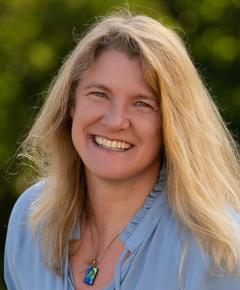
Please welcome Guest Blogger Shona Emery , a GLOBE 5th/6th Grade STEAM Teacher from Ellis School in Fremont, New Hampshire.
This blog is the fourth in a series of posts by GLOBE teachers sharing classroom experiences to support the student research process. The series is supported by NSF funding for the United States Regional Student Research Symposia . If you are a teacher interested in contributing, please contact Haley Wicklein for more information. Specifically, we would love to hear from teachers who can share challenges and advice around the topic of student data ...
Posted in:
Curriculum:
SCIENCE AND MATH
Event Topics:
SCIENCE SYMPOSIA AND FAIRS
GLOBE Science Topics:
SCIENTIST SKILLS
GLOBE PROTOCOLS
GENERAL SCIENCE
Investigation Areas:
DISSOLVED OXYGEN
FRESHWATER MACROINVERTEBRATES
HYDROSPHERE
WATER TEMPERATURE
WATER TRANSPARENCY
PH
Learning Activities:
PRACTICING YOUR PROTOCOLS
Primary Audience:
TEACHERS
Teacher's Guide:
DATA SHEETS
UPPER PRIMARY: 3-5
MIDDLE: 6-8
SITE DEFINITION SHEETS
PROTOCOL INSTRUCTIONS
FIELD GUIDES
Concerns regarding the impact of global warming on vector-borne diseases have intensified interest in the relationship between atmospheric factors and dengue fever incidence. Global climate change poses the threat of serious social upheaval, population displacement, economic hardships, and environmental degradation. Changes in temperature, rainfall and relative humidity have potential to enhance vector development, reproductive and biting rates, shorten pathogen incubation period and encourage adult longevity. In addition, changes in wind direction, velocity and frequency will have an ...
Posted in:
GLOBE Science Topics:
CLIMATE CHANGE
GLOBE PROTOCOLS
Investigation Areas:
HYDROSPHERE
Learning Activities:
HYDROLOGY
Primary Audience:
TEACHERS
STUDENTS
Please welcome Guest Blogger Jayme Margolin-Sneider , a GLOBE 6-8 grade science teacher and STEM Advisor from Westview Middle School in Longmont, Colorado.
This is the second in a series of posts by GLOBE teachers sharing classroom experiences to support the student research process. The series is supported by NSF funding for the United States Regional Student Research Symposia . If you are a teacher interested in contributing, please contact Haley Wicklein for more information.
Thank you to Jayme for sharing this!
Last year, I had two different groups of ...
Posted in:
Curriculum:
SCIENCE AND MATH
Event Topics:
MEETINGS
COMPETITIONS
SCIENCE SYMPOSIA AND FAIRS
GLOBE Science Topics:
SCIENTIST SKILLS
GLOBE PROTOCOLS
GENERAL SCIENCE
DATA INCLUDED
MEETINGS/CONFERENCES
News Topics:
COMPETITIONS
MEETINGS
REGIONS
Primary Audience:
TEACHERS
STUDENTS
PARTNERS